Drug

D0347 | Ferumoxytol

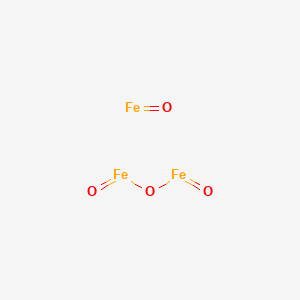
Molecular Formula Fe3O4
Molecular Weight 231.53
Structure
State solid
Clearance Since there is no renal clearance, ferumoxytol is safe in renal failure patients [L2184]. One study estimated the clearance to be **0.0221 L/h** [L2179].
Volume of distribution The population mean estimates for volume of distribution of the central compartment (V(1)), maximum elimination rate (V(max)), and ferumoxytol concentration at which rate of metabolism would be one-half of V(max) (K(m)) were 2.71 l, 14.3 mg/hr, and 77.5 mg/L, respectively [L2182].
Route of elimination Iron can either become a component of intracellular ferritin or be transferred to erythroid precursor cells [L2185].
Half life The pharmacokinetic (PK) behavior of Feraheme has been studied in healthy subjects and in patients with stage 5D of chronic kidney disease, on hemodialysis [L2182]. Feraheme showed dose-dependent, capacity-limited elimination from the plasma with a half-life of **approximately 15 hours** in humans [L2182].
Absorption Bioavailability studies were not conducted as ferumoxytol has been developed for IV administration only [L2179]. Iron therapy dosage is individualized according to specific goals for blood iron concentrations, iron storage parameters (e.g., ferritin, transferrin saturation), and serum hemoglobin concentrations. Iron toxicity is possible with excessive or unnecessary iron therapy. Systemic iron is stored in ferritin and hemosiderin, which are utilized for future production of hemoglobin. The absorption of iron depends on the route of administration. The tissue that first clears parenterally ingested iron from the plasma determines its bioavailability. If the reticuloendothelial system clears iron effectively, only small amounts will become available over time to the bone marrow. Transferrin accepts iron from the intestinal tract and also from sites of hemoglobin storage and destruction [L2190].

  • Iron deficiency

  • Iron deficiency anaemia

  • Renal failure chronic

  • Constipation (0.00021)

  • Diarrhoea (4e-04)

  • Hypertension (1e-04)

  • Abdominal pain

  • Back pain

  • Body temperature increased

  • Chest pain

  • Cough

  • Dermatitis

  • Dizziness

  • Dyspnoea

  • Gastrointestinal pain

  • Headache

  • Hypotension

  • Muscle spasms

  • Nausea

  • Oedema

  • Oedema peripheral

  • Pruritus

  • Rash

  • Vomiting

  • 120899-48-1 12227-89-3 DB06215
    Fe3O4 IRON PIGMENT BLACK (E172) Iron (II,III) oxide
    Iron Oxide Black Iron oxide(II,III), magnetic nanoparticles solution, 10 nm avg. part. size (TEM), PEG functionalized, 1 mg/mL Fe in H2O, dispersion Iron oxide(II,III), magnetic nanoparticles solution, 10 nm avg. part. size (TEM), amine functionalized, 1 mg/mL Fe in H2O, dispersion
    Iron oxide(II,III), magnetic nanoparticles solution, 10 nm avg. part. size (TEM), carboxylic acid functionalized, 5 mg/mL Fe in H2O, dispersion Iron oxide(II,III), magnetic nanoparticles solution, 10 nm avg. part. size, 5 mg/mL in H2O Iron oxide(II,III), magnetic nanoparticles solution, 10 nm avg. part. size, 5 mg/mL in toluene
    Iron oxide(II,III), magnetic nanoparticles solution, 10 nm diameter, biotin functionalized, 1 mg/mL Fe, dispersion in H2O Iron oxide(II,III), magnetic nanoparticles solution, 20 nm avg. part. size, 5 mg/mL in H2O Iron oxide(II,III), magnetic nanoparticles solution, 20 nm avg. part. size, 5 mg/mL in toluene
    Iron oxide(II,III), magnetic nanoparticles solution, 30 nm avg. part. size (TEM), PEG functionalized, dispersion, 1 mg/mL Fe in H2O Iron oxide(II,III), magnetic nanoparticles solution, 30 nm avg. part. size (TEM), amine functionalized, 1 mg/mL Fe in H2O, dispersion Iron oxide(II,III), magnetic nanoparticles solution, 5 nm avg. part. size (TEM), PEG functionalized, 1 mg/mL Fe in H2O, dispersion
    Iron oxide(II,III), magnetic nanoparticles solution, 5 nm avg. part. size (TEM), amine functionalized, 1 mg/mL Fe in H2O, dispersion Iron oxide(II,III), magnetic nanoparticles solution, 5 nm avg. part. size (TEM), biotin functionalized, 1 mg/mL Fe in H2O, dispersion Iron oxide(II,III), magnetic nanoparticles solution, 5 nm avg. part. size, 5 mg/mL in H2O
    Iron oxide(II,III), magnetic nanoparticles solution, 5 nm avg. part. size, 5 mg/mL in toluene Iron(II,III) oxide, 99.99% trace metals basis Iron(II,III) oxide, CP
    Iron(II,III) oxide, nanopowder, 50-100 nm particle size (SEM), 97% trace metals basis Iron(II,III) oxide, powder, <5 mum, 95% Iron(II,III)oxide
    Q411235 S350 SZVJSHCCFOBDDC-UHFFFAOYSA-N

    DrugBank Name Ferumoxytol
    DrugBank DB06215
    CAS Number 120899-48-1, 12227-89-3, 1317-61-9
    PubChem Compound 16211978
    KEGG Compound ID x
    KEGG Drug D04177
    PubChem.Substance 347827764
    ChEBI 50821
    ChemSpider 4937312
    Wikipedia Iron(II,III)_oxide
    DPD 309